

The ocean swallowed his boat in the dark. One moment, Steven Callahan was asleep; the next, water was roaring over him like fire hoses. By dawn, his sailboat was gone, and he drifted on a six-foot raft separating him from the Atlantic. He faced storms and silence, sun and salt eating at his skin, with nothing but a spear gun, a few cans of food, and the will to live—a small, stubborn thing floating 800 miles from the nearest shore.
The Raft Was Failing and He Had Hours to Live
Day 50. His boat was gone, his raft torn open, and Steven Callahan broke. For ten days he’d been pumping, patching, fighting to keep the rubber from collapsing beneath him. Now it was failing faster than his hands could work.
He gave up. Completely. His body was shutting down, his mind emptying out. “I had no more to give,” he would later say. The ocean had won. In a few hours, he’d be gone.
Then fear crept in—sharp, primal, undeniable. The thought of dying in the next few hours terrified him more than the fifty days before it. Something inside him refused.
The Boy Who Dreamed of the Atlantic
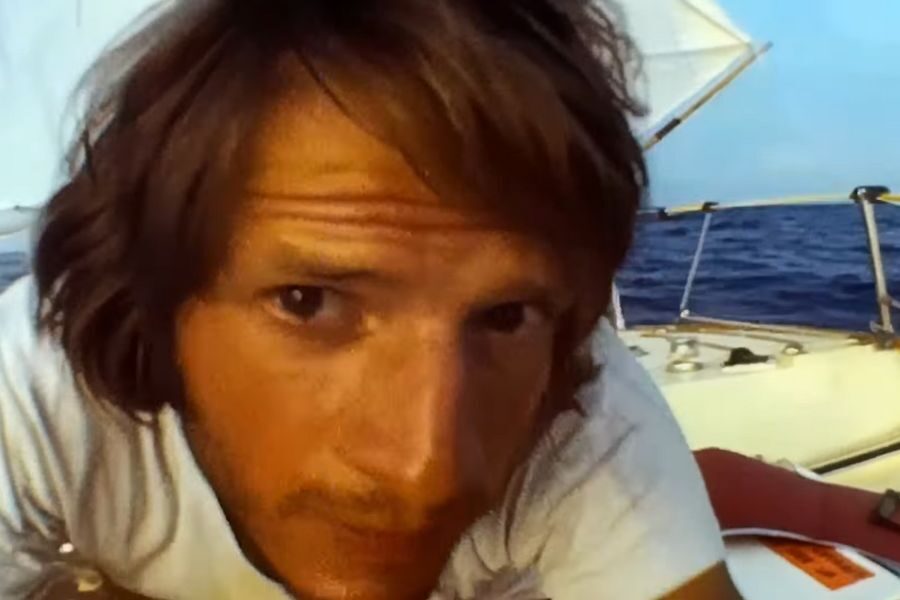
Steven Callahan was 12 years old when the dream first took hold. He wanted to sail across the Atlantic. Alone. Just him, a boat, and the open water stretching endlessly in every direction.
It rooted deep, grew with him through the years, shaped the man he’d become. By his twenties, he was designing sailboats, building them with his own hands.
The Atlantic would become his obsession, his triumph, and eventually, he would get his dream. And it would nearly kill him.
The Boat He Built With His Own Hands

By his early 20s, Steven’s dreams extended beyond sailing, he wanted to create boats. He designed and built a 6.5-meter sloop, sleek and sturdy, built for long voyages and solitary crossings across open water. He named her Napoleon Solo.
She was his pride, every plank and line reflecting years of study and obsession. “I’d spent all my life around boats,” he said. To him, she was more than just a vessel. She was proof that dreams could be built, not just imagined.
And in 1981, she would carry him across the Atlantic Ocean alone, just like he’d always wanted since he was a kid. Since he could imagine the endless blue stretching into the distance.
He Thought He Knew the Ocean

At 29, Steven Callahan set out on Napoleon Solo to cross the Atlantic alone. His life had been in shambles, and the timing felt right. Out here, with nothing but endless water, he felt truly free.
The voyage went perfectly. Every line held, every wave obeyed. He trusted Napoleon Solo as if she were an extension of himself. When he reached the other side, it felt like destiny fulfilled.
But dreams don’t end where you expect. On January 29, 1982, he turned her toward home—from the Canary Islands to Antigua. He didn’t know it then, but the Atlantic would make him earn every mile back.
A Calm Start to His Journey Home
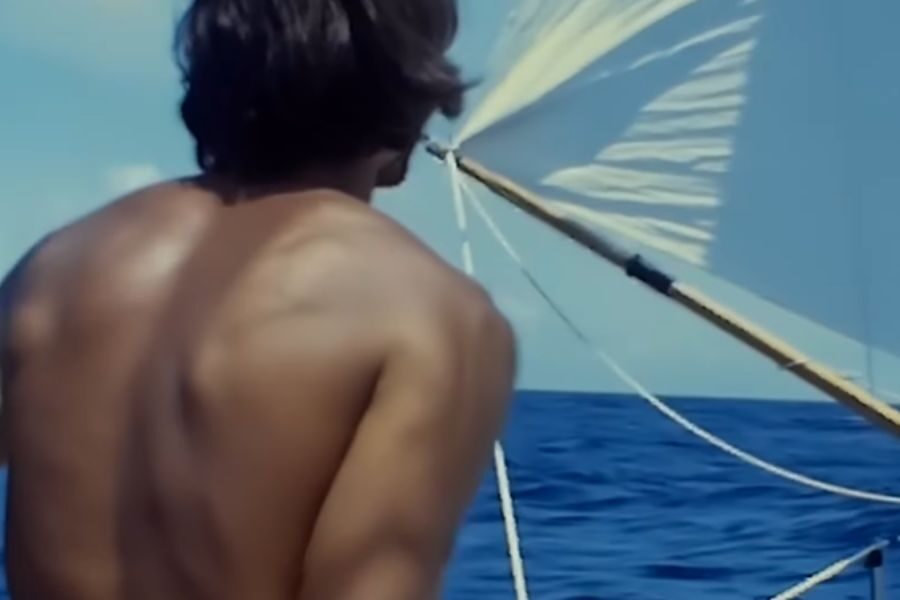
The first week of the return voyage was calm, almost serene. Steady winds, clear skies, Napoleon Solo cutting smoothly through the water about 3,000 nautical miles toward Antigua. Steven Callahan had been through rough seas before. He wasn’t worried when the gale started building.
“I knew the boat and I’d been through much worse,” he would later say. This was just part of sailing, part of the Atlantic’s temperament. He adjusted his sails, checked his lines, and settled in to ride it out like he’d done many times before.
Late that night, in the darkness and wind and rain, something changed. Something massive was coming.
The Crash That Ended Everything
The impact came without warning—a deafening bang that tore through the night. Something massive, a whale or large shark? He didn’t know for sure, but it smashed into Napoleon Solo with a terrifying force. The hull cracked open and water thundered in.
Steven woke up in his bunk, water already roaring over him. “Part of me was saying, ‘You’re gonna die,'” he remembered, “and part of me was saying, ‘Shut up! Do your job!'” The water level was rising with horrifying speed.
Everything he’d built, everything he’d dreamed of, was going down into the Atlantic. He had minutes, maybe less.
He Started Diving to Save His Life
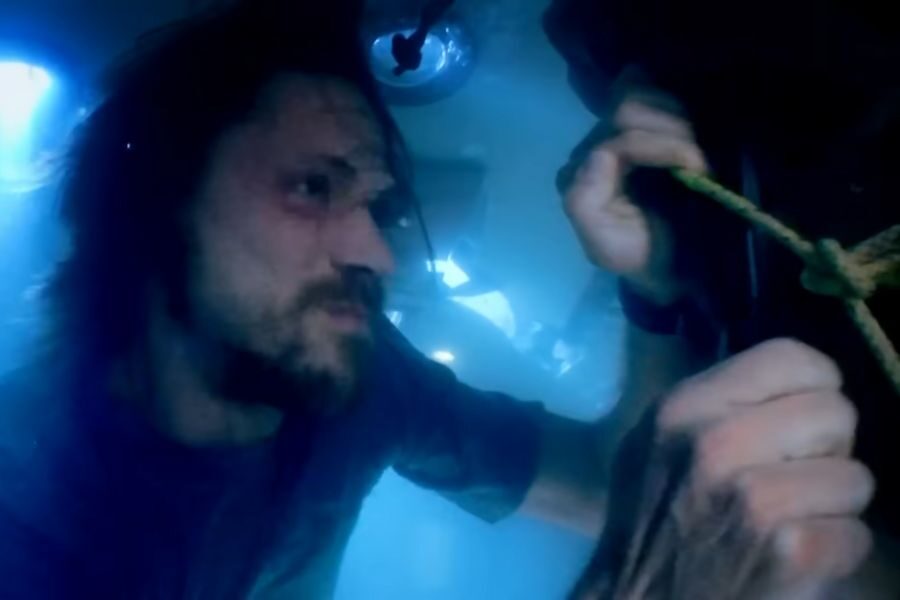
Steven Callahan snapped into autopilot. He grabbed his life raft and started packing it with whatever he could reach quickly, then realized: everything he needed to survive was below, in the rapidly flooding cabin.
He held his breath and went under. Water containers, food, flares, a spear gun, a sleeping bag—each item required another dive. “The water below seemed so peaceful compared with the sea raging outside,” he said. “It felt like entering a watery tomb.”
Exhausted, soaked, terrified, he finally pulled himself onto the six-foot inflatable rubber raft. He tied it to Napoleon Solo with a rope that still felt like a lifeline.
The Night Refused to End

The six-foot circular raft bucked and heaved in the storm. Waves beat the sides relentlessly. “I huddled under the canopy… constantly baling out water,” he recalled, arms burning with each motion, trying to keep the raft from being swamped.
The rope tethering him to Napoleon Solo held. It was still there—still something solid, something familiar to focus on. He bailed all night, shivering, exhausted, not knowing what comes next.
As the first light touched the horizon, he looked at Napoleon Solo and believed the worst was over. But just before dawn, the rope snapped.
And Then There Was Only the Sea
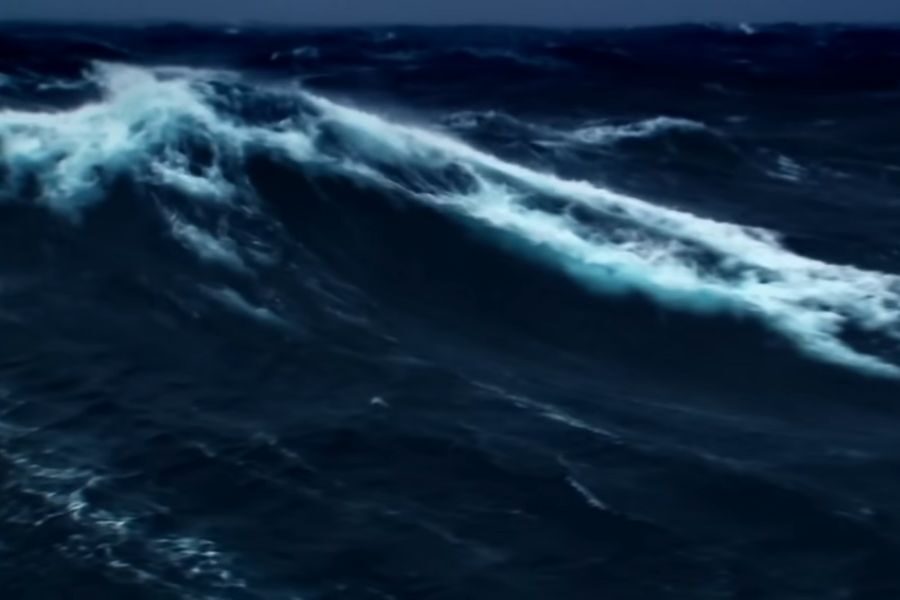
“…I knew I was totally alone,” Steven recalled as he watched Napoleon Solo drift away into the darkness, disappearing into the ocean. His pride. The boat he’d built with his own hands. Gone forever into the Atlantic.
He was 800 miles west of the Canary Islands, drifting in the opposite direction from any land. All I had was a little food and enough water for a few days,” he said.
Now there was nothing between him and the ocean but six feet of inflatable rubber. No one knew he was out here. No one was coming to look for him.
He Counted What Was Left
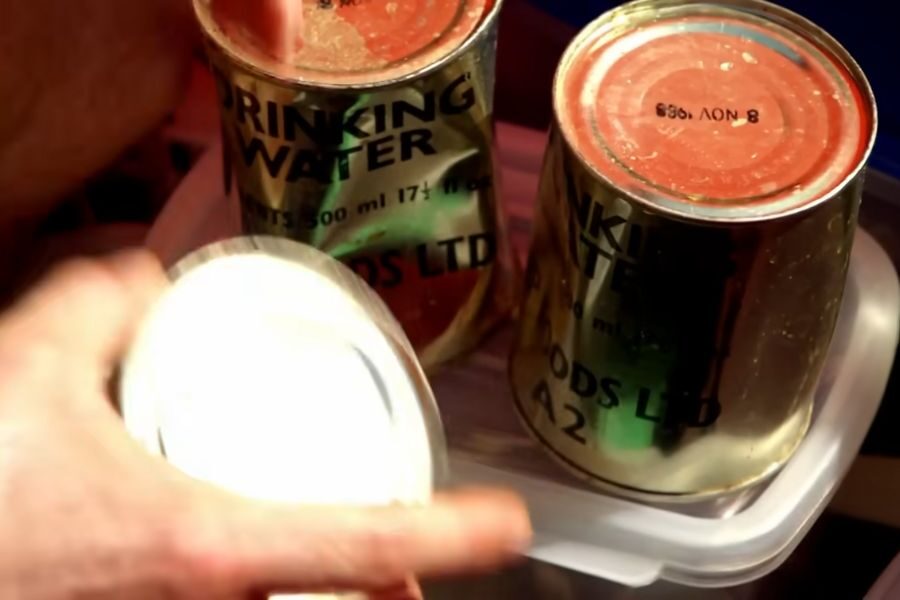
The storm had passed, leaving the Atlantic flat and gleaming. Steven Callahan took inventory of what survived with him. Eight ounces of water stared back at him, along with nuts, raisins, eggs, baked beans, cabbage, and one can of meat.
A spear gun he barely knew how to use. Some flares meant for ships that might never pass by. A sleeping bag to keep him warm at night.
It was him and his rubber island, calculating his survival in its shade with the Atlantic stretching around him, wide and unblinking. He looked at his supplies again. Maybe they’d last eight days if he rationed. Maybe less in the sun.
Facing Everything At Once
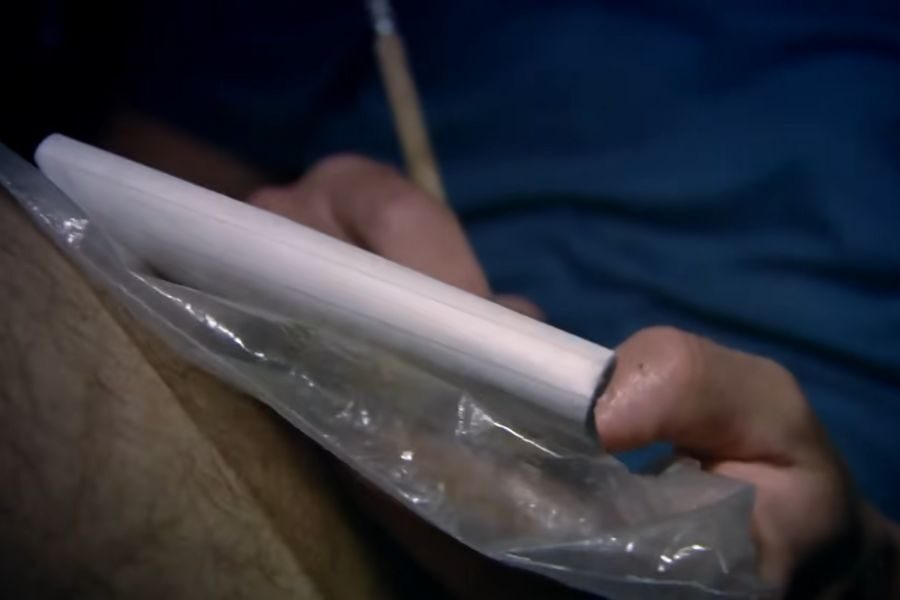
Memories hit Steven like waves he couldn’t dodge. Recoil, he called it—the paralysis after surviving the immediate threat, when you finally register what’s happening. “Basically, your whole life has been flushed down the toilet,” he said. “Well, now how do I survive?”
Divorce. Failed marriages. Dreams half-built and half-abandoned. “It was like having my life go by my eyes very slowly, like a really bad B-grade movie,” he said. The ocean reflected his mistakes on its surface, taunting him.
He scribbled on scraps of paper, recording time that no longer seemed to move. A half journal, half epitaph. The raft creaked beneath him. The days bled together, and he realized survival demanded a choice he hadn’t yet made.
Choosing to Keep Moving
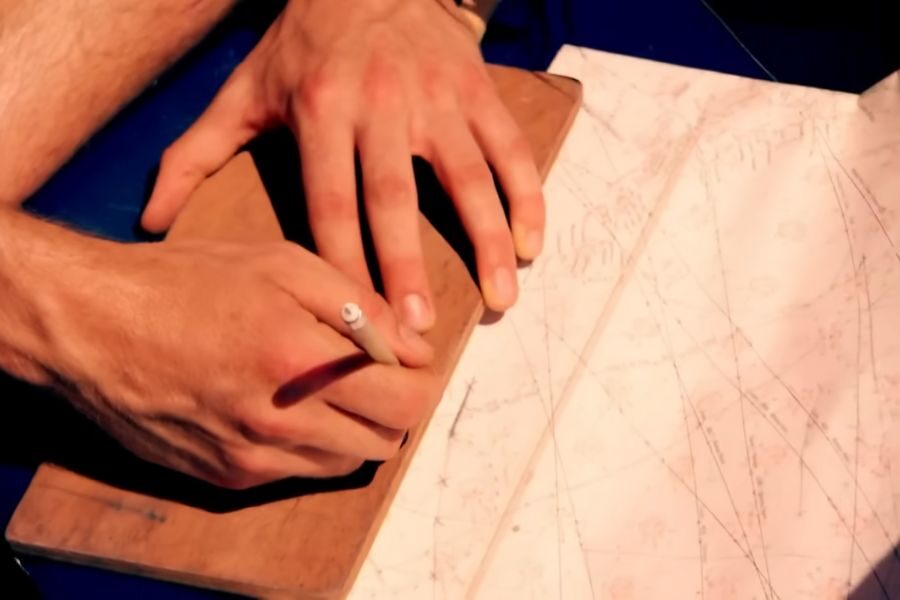
The choice wasn’t easy, but it may have saved his sanity. “I tried to look at the voyage as a continuation, not an end, of the old voyage,” Steven later said. Not a disaster. A journey.
He started keeping a daily log, writing down his position, his thoughts, his strategies. He navigated using the North Star and the horizon, trying to track where he was drifting. Routines became anchors. Small tasks became goals.
“It’s tough to wade your way through that to re-normalizing life, clinging to whatever you can,” he said. But even with this new routine, some tools meant to keep him alive, he had no idea how to make them work.
The Water That Wouldn’t Come

Solar stills came with the raft. Technology developed during World War II, designed to turn seawater into fresh water using the sun’s heat. Designed to save his life. But for days, they produced nothing.
“It’s a great irony that the world’s biggest desert actually is the ocean,” he later said. He tinkered with angles, checking seals, experimenting with different positions. If he couldn’t figure it out, he’d die of thirst surrounded by endless water.
Dehydration was suffocating, it made his thoughts fuzzy. And even as he tried his hardest, water was still out of reach.
The Storm Gave Him an Idea
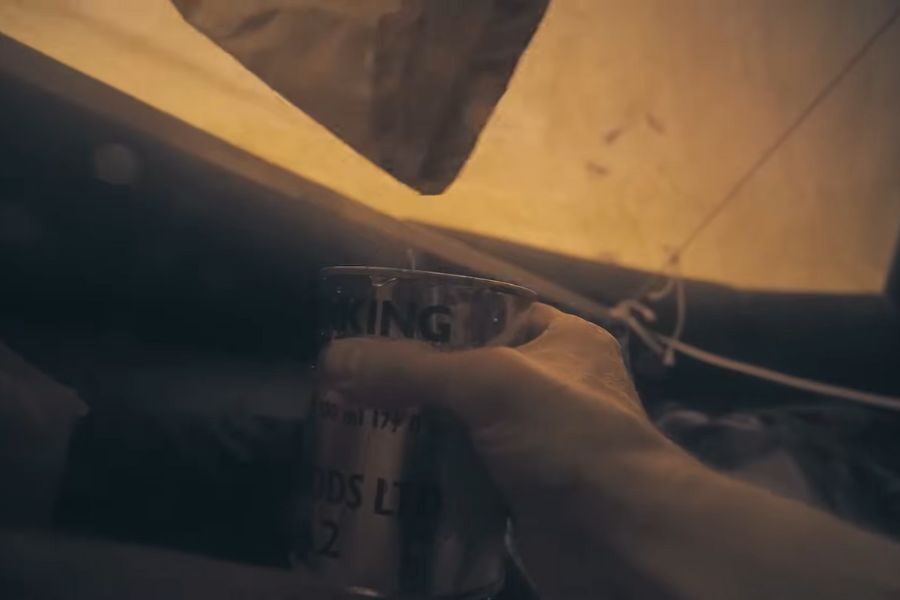
That first night adrift, the storm raged on. Steven was desperately lonesome, shivering, worried he wouldn’t make it till morning. “There was no part of this that was not kind of a hellish experience,” he said.
Then the rain came. He knew survivors had relied on collecting rainwater. If he could use the raft’s canopy to catch it, maybe he’d have a solution. He positioned himself, opened his mouth, waited.
It tasted like vomit. The orange pigment from the canopy contaminated every drop. “It was just so awful it was undrinkable,” he said. “I decided I’m never going to drink the water off the canopy. It was just too dangerous.”
He Tasted Victory for the First Time
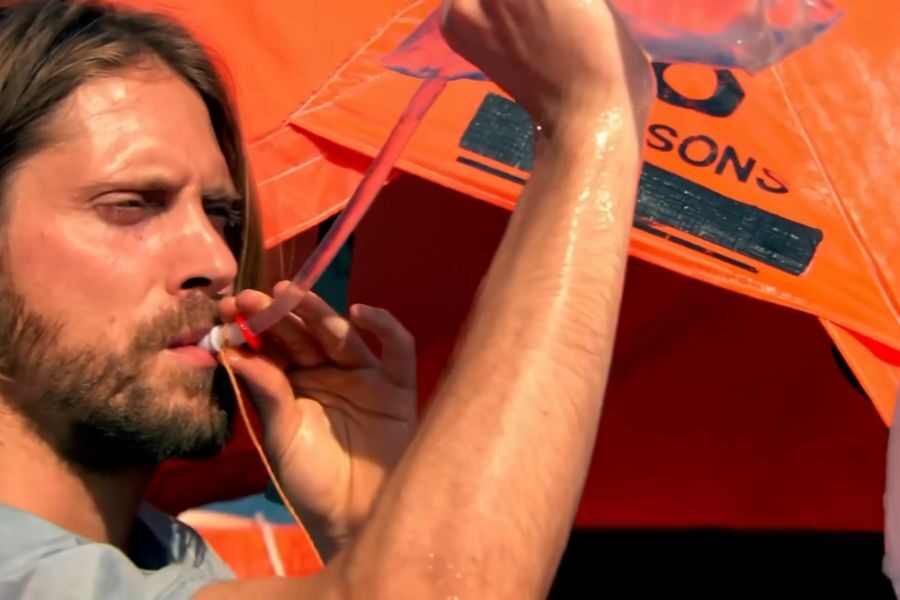
After seven days at sea, the solar still finally worked. He’d spent hours ripping apart his other stills, examining every seam and tube. Now, a few drops of water gathered inside. Not much. But it was fresh. It was real. It was life.
“I’m talking a spoonful of fresh water was like the hugest high I could possibly have,” he said. The stills would produce just over a pint a day when they worked properly—barely enough, but enough to keep him alive.
He’d solved the water problem. But now, after a week adrift with almost no food, another crisis loomed. He was starving. And the ocean offered no mercy.
He Could See His Next Meal, But Not Reach It
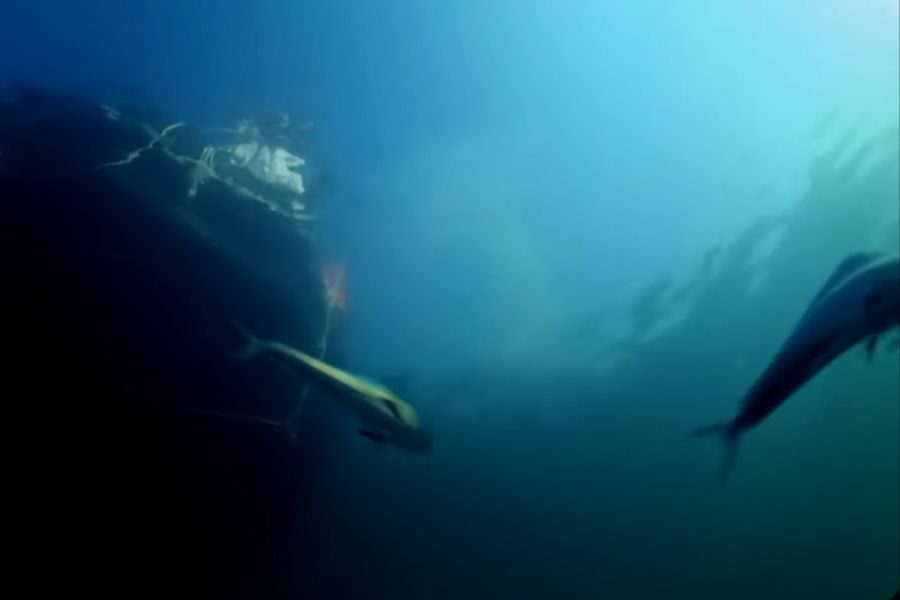
Steven stared at the water and saw life moving beneath him. Mahi-mahi. Beautiful, fast, mockingly unreachable. “Immediately, my heart kind of jumped in my throat. There are fish here,” he said.
He had the spear gun he’d grabbed during the escape. But it felt alien in his grasp. “I knew right away that if I’m fishing with a spear in an inflated raft, I’m taking a big chance.”
Hours passed. “I kept trying, and nothing would work. I just couldn’t spear one. It was very frustrating.” He just needed one lucky shot, one break. Then came a snap—but not the one he wanted.
The Break That Changed Everything
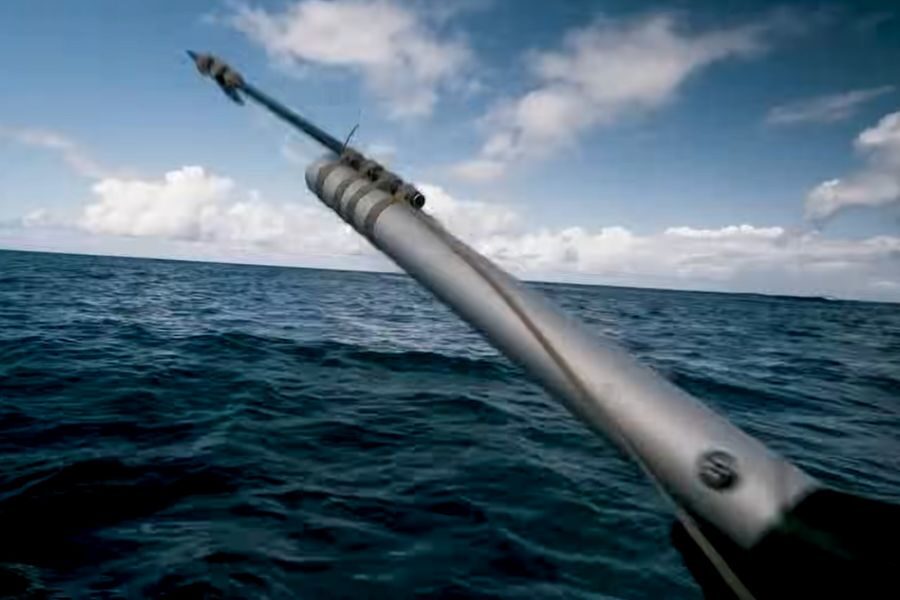
When the spear’s firing mechanism broke, Steven Callahan’s world shrank to 18 inches. “Now I don’t have a range of six feet, possibly,” he said. The fish had to be directly beneath the tip, close enough to touch, close enough to lose.
For days, he struck and missed. “It was the most hellish time in my life,” he said. But giving up meant death. So he watched, held still, and patience became his friend. Then—the catch. His first mahi-mahi. He ate it raw, the flesh still warm. It tasted like hope.
By day 14, things were looking up. “So now, as long as the raft stays in one piece and I keep my act together, I might be able to live out here indefinitely,” he said. But that night, something brushed against the raft.
Something Moved Beneath Him
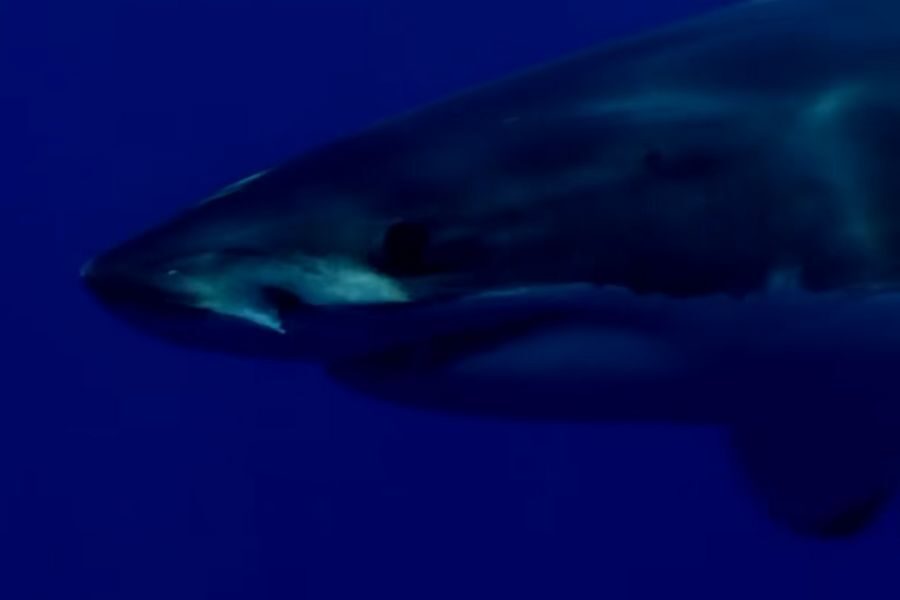
Something thudded against the bottom of the raft. Then again. Flop. Flop. Flop.
Before Steven could move, the entire raft jolted upward, lifting it clean off the water. His heart slammed against his ribs.
A massive shark was ramming the raft from below. Each hit felt like the world buckling under him. If it tore the fabric, he’d be in the water—helpless. “Whether the shark eats me or not, I’m done,” he thought.
He grabbed the broken spear and swung blindly, striking at the dark shape. He hit it a few times. Finally, mercifully, it swam away. But the stillness it left behind was worse than the attack.
A Light on the Horizon
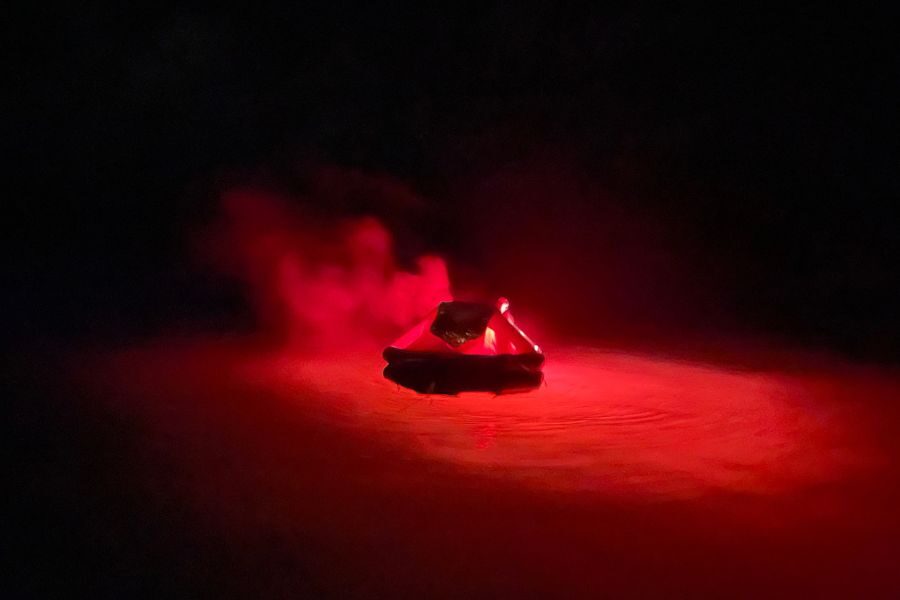
After 15 days lost at sea, Steven finally drifted into the shipping lanes. And then on the horizon: lights. A ship. “I thought, ‘Ah, this is it. I’m here,’” he said.
Perfect conditions. Calm seas. Completely black night, perfect for flares. “It looks like the ship’s coming for me. I was convinced that it had seen me. It was close enough I could smell the diesel in the air.”
Rescue had come. He lit a flare. And then the ship just sailed right past him. He sat there, rocking in its wake. But Steven told himself it was a start. Where there was one ship, there would be others.
The Waiting Game

Steven was now in the shipping lanes but he was a speck on an endless ocean. He scanned the horizon from morning to night. Searching. Waiting. Hoping.
“Every morning was a bit of hope, and then every afternoon was like the depths of fatigue and despair.” Over the next 10 days, he spotted only a handful of ships. They all sailed by.
The shipping lanes were just as empty as the rest of the ocean. His fantasy of easy rescue was blown to hell. “That was definitively the hugest down.”
A Thousand Miles to Nowhere
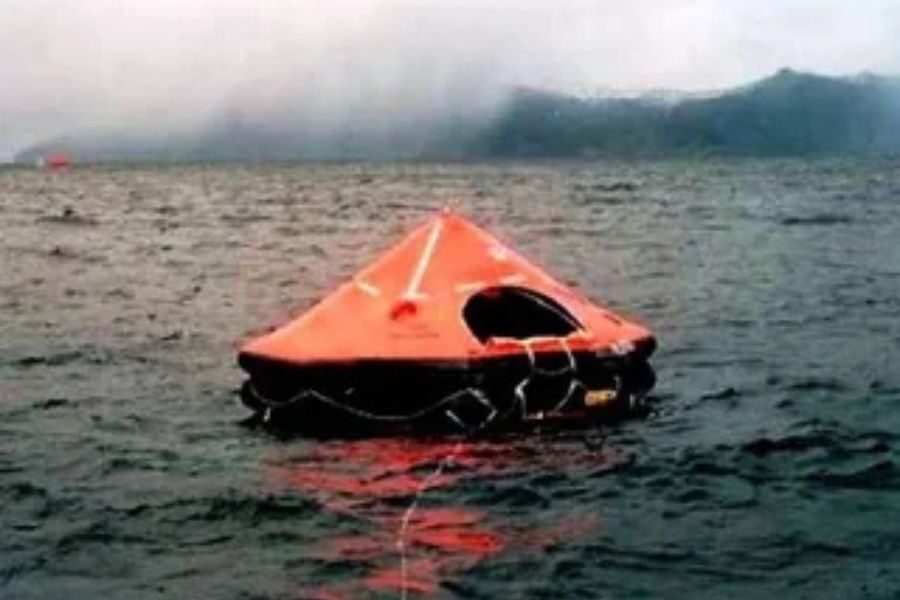
The shipping lanes disappeared behind him. A month at sea, and Steven had drifted right through them—unseen, un-rescued, alone. Back home, he’d told them not to worry for weeks.
He cried for the first time. Not from fear, but from the weight of it all pressing down. “This is the state of my life,” he said. “What are you doing out here?” The ocean stretched endlessly, reflecting back every failure, every wrong turn that led him to this rubber circle.
The Caribbean was still a thousand miles away—another month, maybe more. The thought didn’t feel possible. It felt like staring at forever.
The Ocean Made the Rules Now

Steven settled into rhythms the ocean dictated. Fishing at dawn with the broken spear. Navigating by stars he’d memorized as a boy. Rationing water drop by drop, letting it absorb on his tongue before swallowing.
Sleep came in hour-long intervals, his body curled sideways in the cramped raft. Salt worked into the sores covering his skin—chest, legs, backside—rubbing constantly against the rubber. The tropical sun glinting and burning. His ribs began showing through.
“I spent the next two and a half months learning to live like an aquatic caveman,” he said. Small tasks. Small goals. Prioritize the biggest problem, take small steps. The steps stacked up, kept him moving forward.
An Island Formed
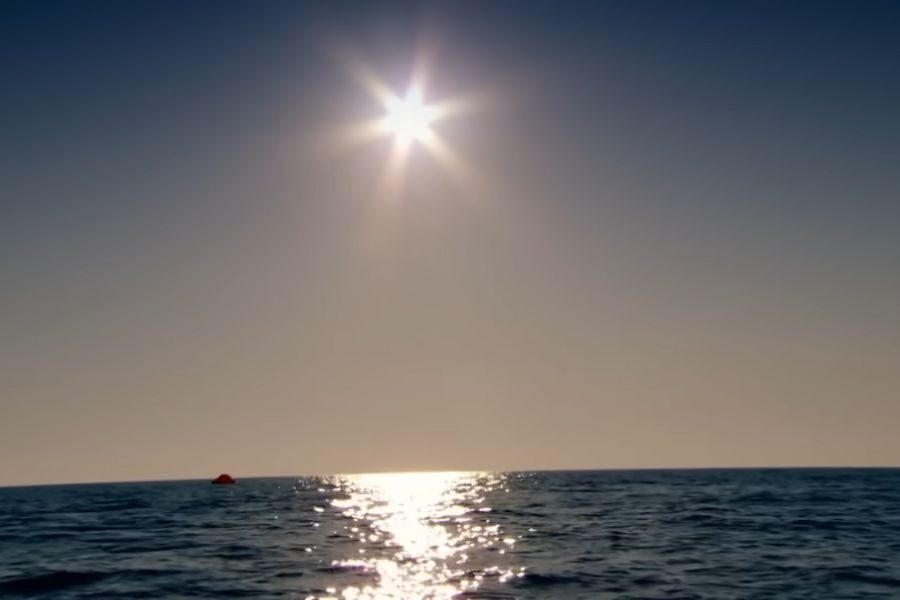
Barnacles appeared first—white crusts spreading across the raft’s underside. Then weeds, dark tangles swaying when he shifted position. Steven lay on his stomach and watched the mahi-mahi circle below, their bodies flashing green and gold in the filtered light.
One had a scar along its flank. Another swam with a slight list to the left. He knew them individually, recognized their patterns. They fed on smaller fish hiding in his shadow. He fed on them. They scattered when the spear entered water, then returned an hour later as if nothing had happened.
“They were kind of symbolic of the magic and mystery of life and the sea,” he said. The fish became more than food. They were friends, accompanying him, a presence that made the emptiness bearable. One day, they’d bring his salvation. But first, they’d nearly kill him.
Day 43: The Spear Went Through
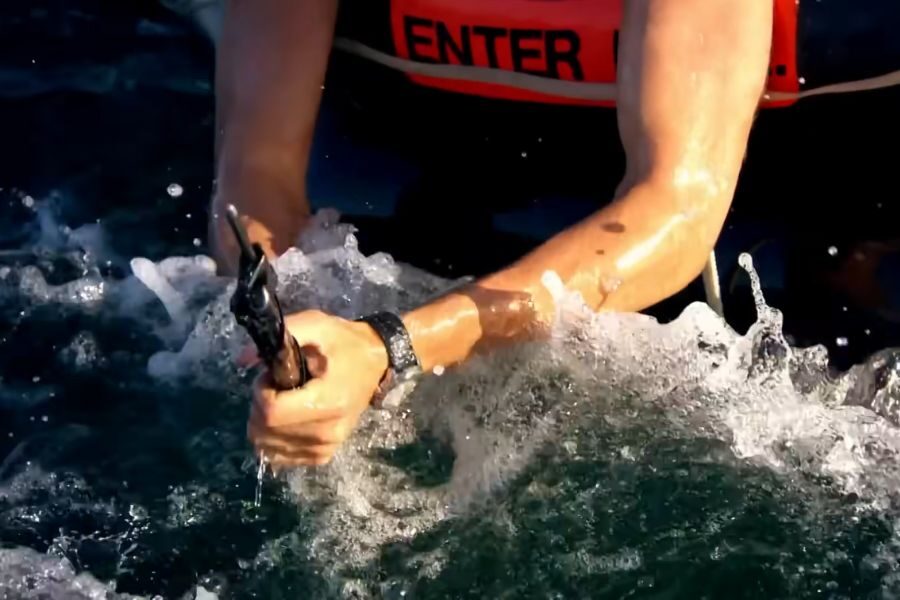
The dorado thrashed violently as Steven pulled it in. Powerful, desperate, fighting for its life. The broken spear tip came loose. The fish rolled along the bottom tubes of the raft, twisting, and then—a sound that stopped his heart.
Air hissing out. Fast. The entire bottom tube deflated in seconds, the raft folding inward like a punctured lung. Steven’s chest tightened. Everything he’d survived, everything he’d figured out, depended on six feet of intact rubber.
“I knew I was in serious, serious trouble,” he said. He’d thought he could survive indefinitely as long as the raft stayed whole. Now it wasn’t. Maybe this was the end of the line.
The Leak That Wouldn’t Stop
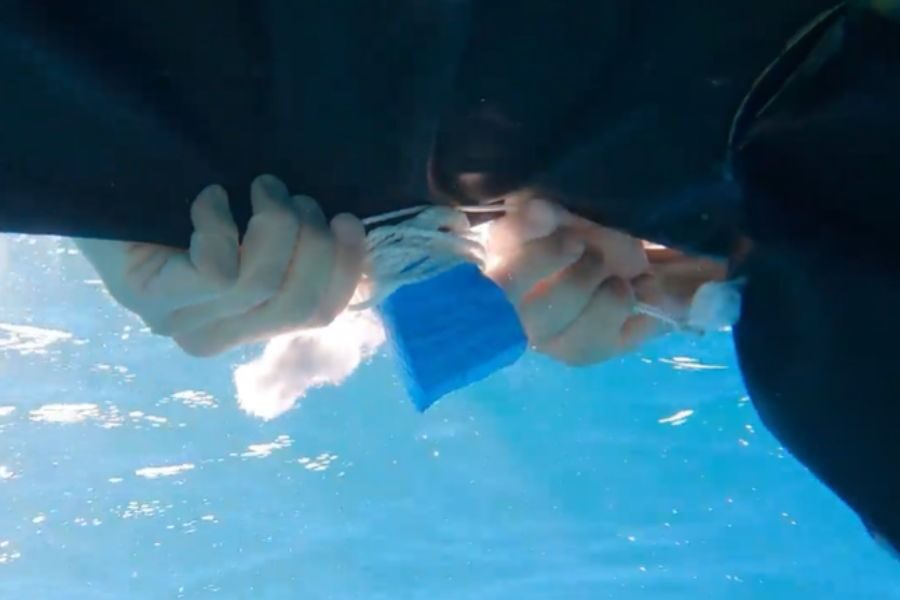
The raft wouldn’t hold air. Steven pumped constantly, watching it inflate then sag again within hours. Each pump burned calories he couldn’t replace. He stopped fishing, ate the dried fish hanging in the canopy, and drank stored water he couldn’t replenish.
“It was like I was walking in rubber quicksand,” he said. He tried every patch he could think of. Wound materials around the hole tight. Pumped it back up. Watched it deflate again. Days blurred into an endless cycle of desperate repairs.
His body was failing. His mind fracturing at the edges. The thought crept in slowly, then settled: maybe he wouldn’t be able to fix this. Maybe this was how it ended—not with a storm or a shark, but with a slow leak he couldn’t stop.
Day 50: His Hands Stopped Moving
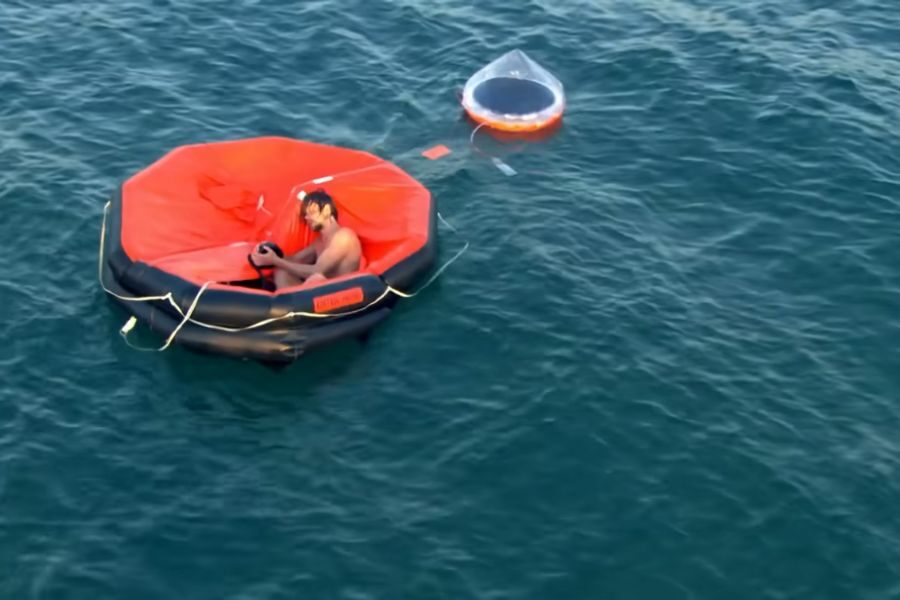
Steven’s hands stopped moving on the pump. Just stopped. The air hissed out of the tube and he watched it deflate with something close to relief. He had nothing left.
He lay back. The sky was blue and perfect and indifferent. “I was absolutely beat. That was it. I gave up,” he said. The voice in his head turned cruel: You’re going to die alone. Louder, You’ve never done anything successful. You never gave enough of yourself to anybody.
The raft sagged beneath him, folding in on itself. In a few hours the bottom would give out completely. He’d slip through into the water. It would be over. The ocean had finally won.
The Fork That Saved Him
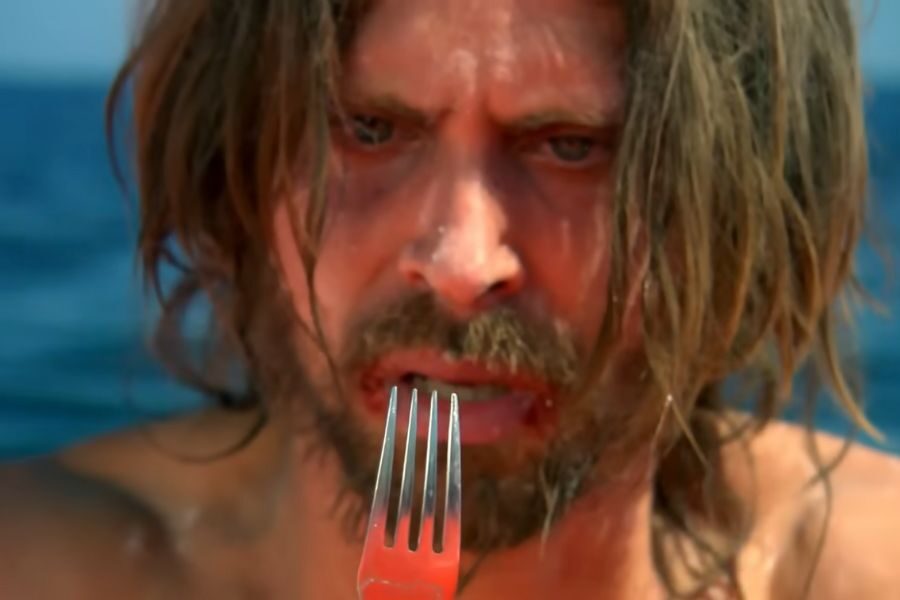
Then the fear came—sharp, primal, immediate. Not the slow dread of the past weeks, but pure terror. “This is very real,” Steven said, “and you’re going to be dead in a matter of hours if you don’t snap out of it.”
He searched frantically through his supplies for anything that might work. His fingers closed around cold metal. The fork. Just an ordinary dining fork from Napoleon Solo, somehow still with him. He threaded it through the rubber, secured the patch, tied everything down tight.
He pumped air back in. Watched. Waited. It held. “I couldn’t jump around or anything, but that was just like the hugest victory of my life.” The raft was stable again. He’d won this battle. But the war wasn’t over.
Just Hanging On
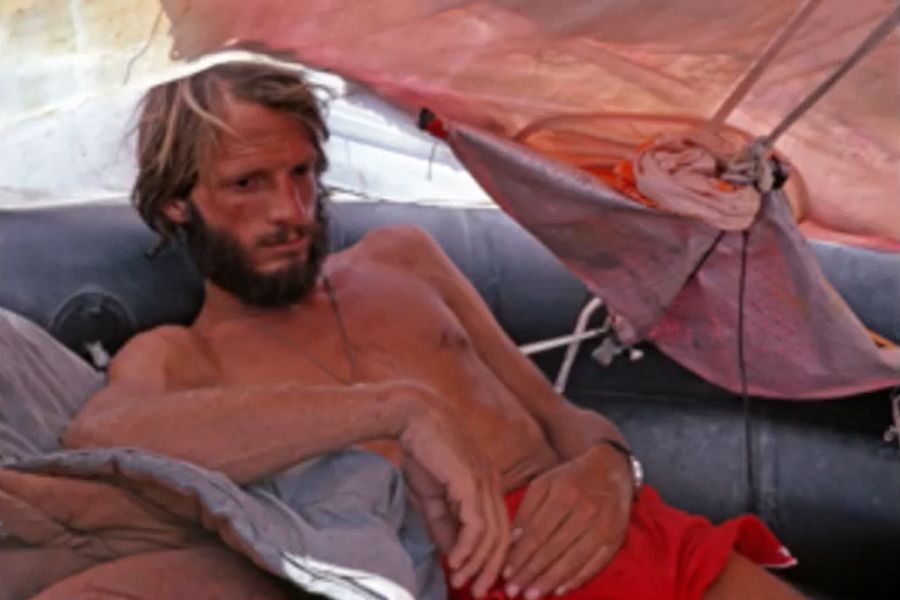
The second hand on Steven’s watch moved. He stared at it. Blinked. Checked again—only three seconds had passed. It felt like minutes. Time had broken, stretched into something thick and suffocating.
His ribs pressed sharp against the rubber floor. Each breath took deliberate effort. He lifted his arm to adjust the solar still and the motion felt distant, like his body was operating on a delay. The sun crossed overhead. He didn’t move with it.
“It really was a period of just hanging on,” he said. A flying fish landed in the raft, flopped twice, went still. He stared at it for what felt like an hour. His watch said four minutes had passed. He ate it without tasting anything.
The Cloth Rotted Through
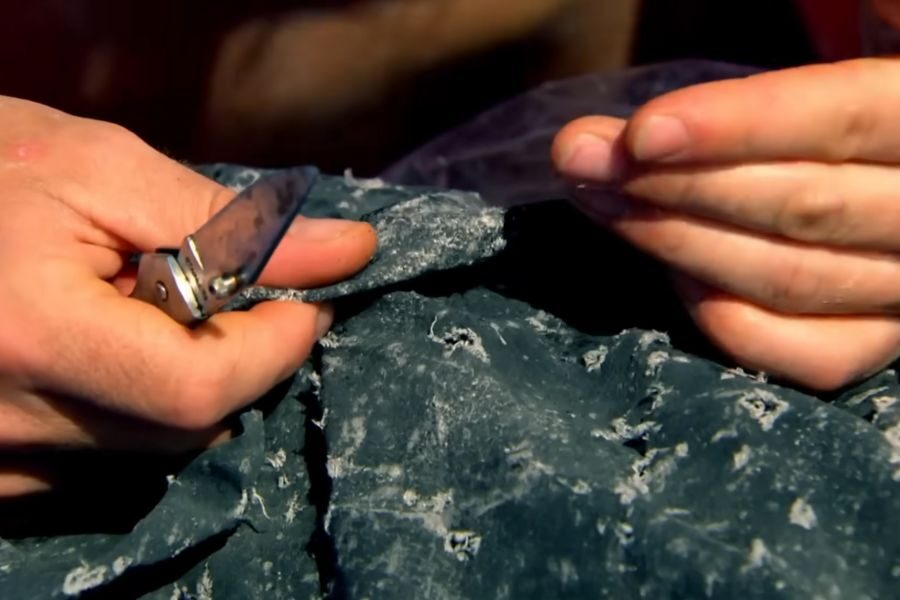
Day 66. Steven picked up the solar still and stared at the bottom. The cloth had disintegrated completely, eaten away by salt and sun and time. He tried positioning it differently, checking the angles. Nothing. No condensation formed. No drops left for him.
Three cans of emergency water left. His hand reached for one, trembling. The physical part of him screamed to drink it now, all of it, just end the burning thirst. But something deeper, more stubborn, said no. “Unless you are dying, you’re not getting into that right yet.”
“I just figured this really is it,” he said. The water wouldn’t come anymore. The days of careful rationing, of sipping drops like they were gold—all of it ending. And the ocean just watched, just as it had on his first day.
A Missed Calculation
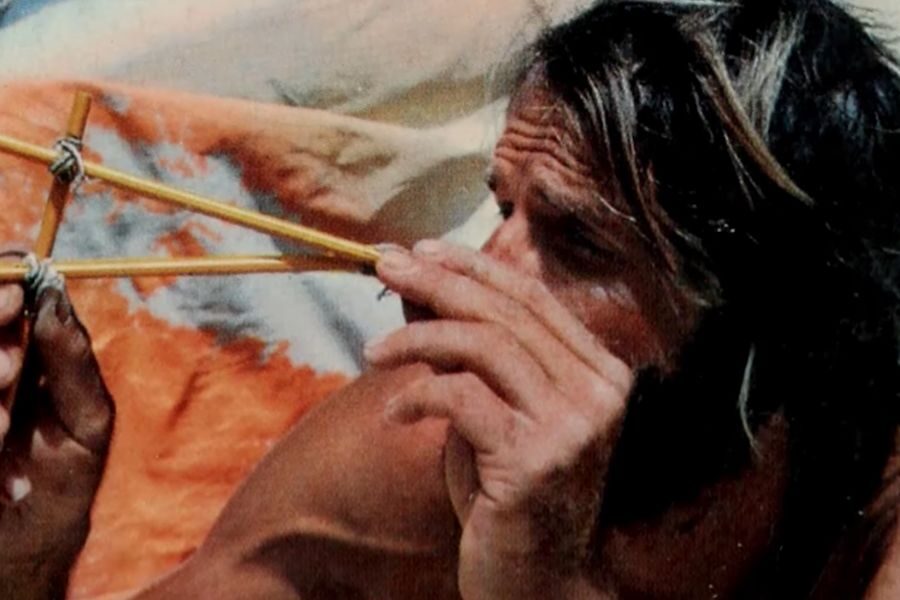
He should have seen islands by now—days ago. The calculations said so. But there was nothing. Only water reflecting sky, sky meeting water, the horizon an unbroken circle around him.
He pulled out his navigation notes, what if he’d been wrong? What if the current had pushed him north instead of west? England was eight months away. Maybe more. Maybe never. “That was tough,” he said. “I was very worried that I had screwed up.”
The sky above him was impossibly clear, the kind of blue that belongs in paintings. Clouds drifted past, white and perfect. “It was a view of heaven from a seat in hell,” he said. His body was shutting down in the most beautiful place he’d ever seen.
A Different Sign of Life
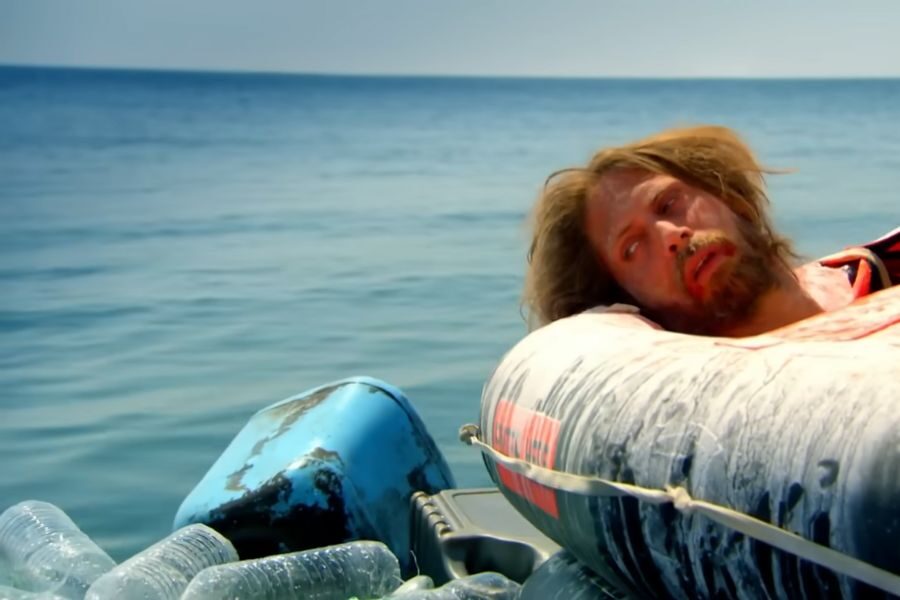
Something different floated past. Not seaweed or natural debris, but a plastic bottle half-submerged in the swell. Then a wooden crate, weathered and splintering. More plastic. Things that had been touched by human hands, discarded, drifting in the currents.
Steven’s pulse quickened despite his exhaustion. “To me, that was the first definitive sign that I was coming into changes,” he said. The ocean felt different here—closer to something, to somewhere. Land had to be near. It had to be.
On the 75th night, he saw it: a steady light on the horizon. Faint but unmoving. A lighthouse. Morning came and the green appeared—an island, but coral reefs ringed the shore like teeth, and the cliffs rose from the water. Land was right there. And he couldn’t reach it.
The Birds Came at Dawn
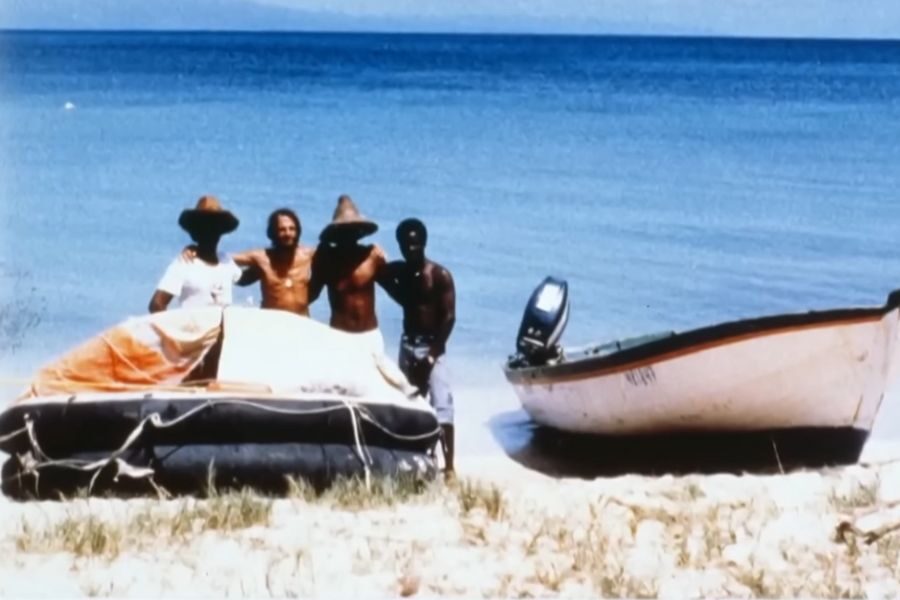
April 20, 1982. Day 76. The birds arrived in a frenzy Steven hadn’t seen before—diving, circling, their cries sharp and insistent overhead. They weren’t interested in him. They wanted what was below: the guts he’d thrown back, the ecosystem that had gathered beneath his raft.
Offshore, a boat appeared. Two fishermen, drawn by the commotion, thinking it meant schools of fish worth catching. They steered closer. Closer still. Steven grabbed his lone T-shirt, pulled it on. Made a makeshift diaper from a triangular bandage.
When they reached the raft, they found him instead. A hundred pounds. Skeletal. Skin covered in sores. “They weren’t sure what to make of me,” he said. After 76 days, they reached down to pull him up. His legs wouldn’t hold him.
What the Fish Had Given Him
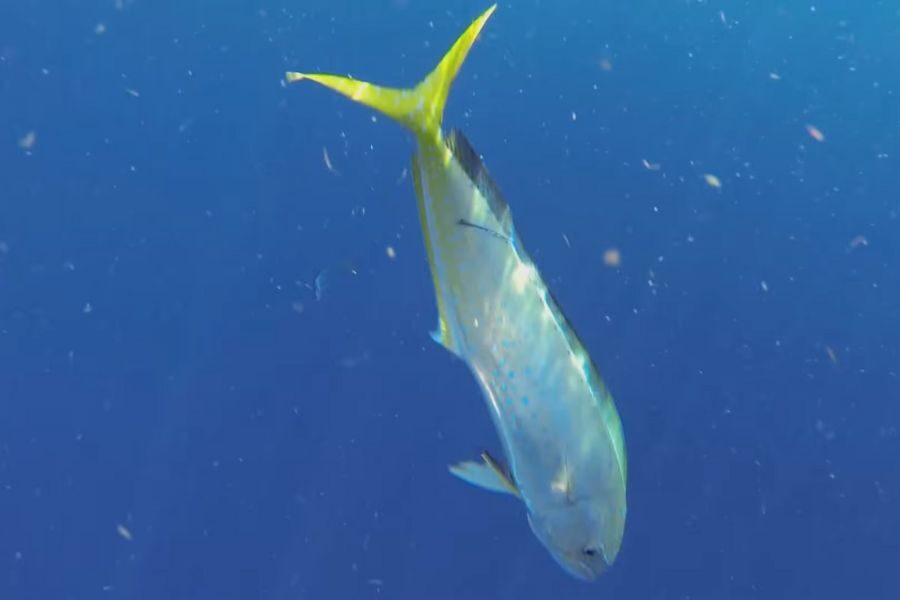
His legs were useless, but that didn’t matter yet. Steven was on a boat. With people. Real people who spoke and moved and were saving him. As the fishermen steadied him, he thought about the mahi-mahi circling below his raft all those weeks.
How they’d fed him when he was starving. How he’d recognized them, felt connected to them in the brutal loneliness. How one had punctured his raft and nearly killed him. And now, at the end, they’d drawn the birds. The birds had drawn the fishermen.
“It really is a fish tale,” he said. The ecosystem he’d lived within for those impossible days had brought him home. The fishermen pulled him aboard. And then the world exploded.
Every Sense Was Amplified

The colors hit him first—so vibrant they almost hurt. Every smell sharp and overwhelming after months of salt and sun and fish. “My senses were like plugged into an electric circuit,” Steven said. “It was heart-wrenching. It was so beautiful.”
He’d lost a third of his body weight. His legs had atrophied—he couldn’t walk. A nurse removed his T-shirt with two fingers, holding it away from herself. “I couldn’t smell anything, but I’m sure I stunk like old, rotten fish,” he said. He never saw that shirt again.
After six weeks in the hospital, he was reunited with the parents he thought he’d never see again. The raft that kept him alive now sits in the Peabody Essex Museum in Salem, Massachusetts.
What Survival Actually Was

Steven would be asked about those impossible days. People wanted to hear about miracles, about heroism. “There’s nothing noble in me having survived,” he said. “It’s just what I did.” He had too much unfinished business. That’s what kept him alive.
The ocean had stripped him bare. Forced him to face every failure, every regret, every part of himself he’d been running from. And somehow, in that brutal isolation, something shifted. He came back different—not better in some clean, easy way, but changed.
“I still don’t regret my time alone in the raft,” he said. “To this day I feel enlightened by what I went through because it changed me for the better.” But enlightenment and willingness are different things. Would he do it again? Never.
